Reviewing Best Dog Dad Ever for Embroidery
As a designer who spends more time staring at stitch simulations than actual fabric, I have learned that not every graphic translates well to thread. We often see T-Shirt Designs and Graphics marketed broadly, but the real test is how they hold up under the needle. Recently, I pulled the Best Dog Dad Ever design into my workspace to evaluate its potential for real-world application. This is not just a quick glance; it is a practical assessment for embroidery designers, Etsy sellers, and craft business owners who need to know if this asset is worth their hoop time.
First Impressions and Visual Personality
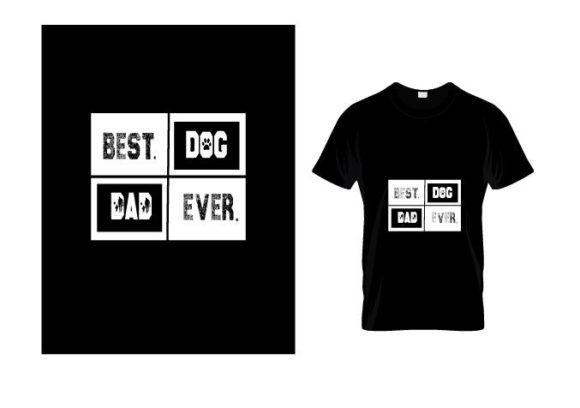
The first thing that strikes you about Best Dog Dad Ever is its straightforward, affectionate tone. It does not try to be overly complex or abstract. The layout centers on the quote, creating a clear focal point that communicates its message instantly. For a personalized gift, this clarity is crucial. Customers buying for Father’s Day, birthdays, or holidays want immediate recognition of the sentiment. The design feels warm and approachable, fitting naturally into the niche of pet-loving apparel.
From a structural perspective, the typography appears bold enough to withstand stitching, which is a common failure point in many digital files. Thin serifs or overly decorative scripts often disappear into the fabric texture, but this design seems to prioritize legibility. When I visualized it as a machine embroidery design, I could immediately see it working on a variety of substrates without losing its identity. It balances playful sentiment with a clean aesthetic, making it versatile for both casual wear and home decor.
Real-World Application: The Sweatshirt Test
To truly understand the value of any embroidery file, you must imagine it on a finished product. I pictured this design stitched onto a heather grey crewneck sweatshirt. This is a staple item for any small shop product line. The contrast between the thread colors and the fabric would be key here. A navy or forest green thread against the grey would create a sophisticated, masculine look that appeals to the target demographic: dads who love their dogs.
In this scenario, the design acts as the hero element. It does not need excessive embellishment. If I were producing this for a client, I would likely keep the stitching clean, avoiding unnecessary satin stitch borders unless the client requested a patch-like appearance. The simplicity of the quote allows the texture of the fill stitch to shine. On a sweatshirt, the slight pile of the fabric can sometimes obscure fine details, but because Best Dog Dad Ever relies on strong letterforms, it remains readable and impactful. This makes it an excellent candidate for custom apparel lines where consistency and quality are paramount.
Versatility Across Product Lines
Beyond sweatshirts, this design has legs. Consider a canvas tote bag design. Here, the durability of the stitch becomes important. Totes undergo significant stress and washing. A design with moderate stitch density is ideal to prevent puckering while ensuring longevity. This graphic could also translate well to an embroidered patch. If digitized with a border, it becomes a removable accessory that customers can iron or sew onto jackets, hats, or backpacks. This versatility increases the perceived value of the design assets you purchase.
For Etsy sellers looking to expand their catalog, this design fits seamlessly into seasonal collections. It works for holiday embroidery projects, such as Christmas ornaments or stocking stuffers, provided the scale is adjusted correctly. It also suits baby embroidery items, like a onesie for a new dad, though care must be taken with hoop size and placement to ensure comfort against sensitive skin.
Technical Considerations and Potential Pitfalls
While the design is strong, practical experience dictates caution in certain areas. One must consider the hoop size relative to the text. If you are attempting to stitch this on a small item, such as a baby hat or a pocket square, the lettering might become too dense. Tiny lettering can result in thread breaks or a messy finish if the digitizer has not optimized the pathing. Always check the minimum recommended hoop size before committing to production.
Fabric choice is another critical variable. On textured fabrics like terry cloth or heavy denim, the definition of the letters might soften. In these cases, using a contrasting underlay or adjusting the stabilizer type is essential. For stretchy fabrics, such as performance tees, a cut-away stabilizer is non-negotiable to prevent distortion after washing. Dark fabrics present their own challenge; if the design includes light-colored threads, you may need to adjust the stitch order or add a backing layer to prevent the fabric color from showing through the stitches.
Additionally, be mindful of curved surfaces. Stitching this on a cap requires careful positioning. The center of the design must align perfectly with the cap's seam to avoid visual distortion. If the design is too wide, it may wrap around the curve awkwardly, breaking the visual flow of the quote. Always run a test stitch on a similar curved surface if you are new to headwear embroidery.
Enhancing Brand Value and Customer Trust
Using high-quality Graphics like Best Dog Dad Ever directly impacts your brand perception. A clean, well-stitched design signals professionalism. It tells the customer that you care about the details. In the competitive world of commercial embroidery, consistency is key. If this design holds up well across multiple products, it becomes a reliable staple in your inventory. This reliability builds customer trust, leading to repeat business and positive reviews.
Furthermore, the emotional connection of the design drives sales. "Dog Dad" is a proud identity. By offering a product that celebrates this role, you are selling more than just thread on fabric; you are selling validation and joy. This emotional resonance increases the giftability of the item. People are more likely to purchase a product that speaks directly to the recipient's passions. For craft business owners, this means higher conversion rates and potentially higher price points, as personalized, meaningful items command premium pricing.
Practical Designer Notes for Implementation
Before you list this as a digital embroidery file or start stitching for clients, take these practical steps:
- Test on Scrap Fabric: Always stitch a sample on the exact fabric type you plan to use. Check for puckering, thread breaks, and registration issues.
- Check Thread Contrast: View your design in black and white mockups to ensure the values stand out. High contrast improves readability from a distance.
- Review Stitch Density: If the file allows, inspect the density settings. Too dense, and the fabric will pucker; too sparse, and the backing will show.
- Confirm Licensing: The product description mentions formats like EPS, JPG, PNG, Ai, and SVG. Ensure you understand the license terms for commercial use. Some files are for personal use only, while others allow for finished product sales. Clarify this before selling.
- Inspect Small Details: Zoom in on the vector files (Ai, EPS, SVG) to check for anchor points and clean lines. This helps in understanding how the design was constructed, which can inform your digitizing adjustments if needed.
- Use Proper Stabilizer: Match your stabilizer to your fabric. Tear-away for stable woven fabrics, cut-away for knits, and wash-away for delicate or sheer materials.
In conclusion, Best Dog Dad Ever is a solid addition to any designer’s library. It offers a blend of emotional appeal and structural simplicity that works well for various embroidery projects. By approaching it with a critical eye toward technical execution and market fit, you can leverage this design to create high-value, best-selling items for your handmade product line. Remember, the success of the final piece depends not just on the design itself, but on the care and expertise applied during the stitching process.