Reviewing It s About Hitting the Ball for Embroidery
As a designer who spends more time staring at stitch simulations than actual fabric, I have learned to be skeptical of vector graphics marketed for embroidery. We often see T-Shirt Designs and Graphics that look crisp on a screen but turn into a tangled mess under the needle. When I first pulled up the file for It s About Hitting the Ball, my initial reaction was cautious curiosity. The concept is straightforward—a golf-themed quote paired with visual elements—but the devil is always in the digitizing details. This review is not just about whether the image looks good; it is about whether it holds up when you are trying to run a profitable craft business or create a high-quality personalized gift.
First Impressions and Visual Personality
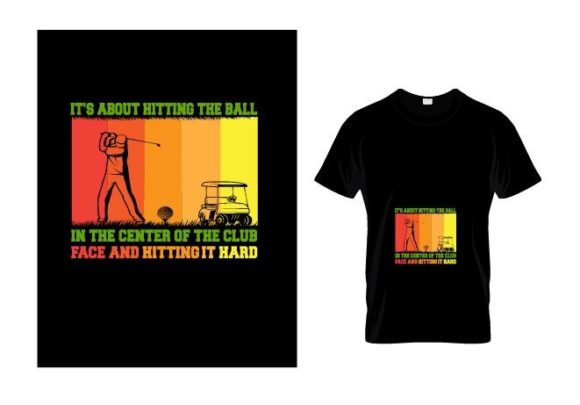
The mood of It s About Hitting the Ball is playful yet focused. It captures that specific moment of concentration every golfer knows, wrapped in a witty observation about hitting the ball in the center of the club. Visually, the layout feels balanced. For an embroidery project, balance is critical because uneven weight distribution can cause puckering, especially on lighter fabrics. The design does not appear overly dense, which is a relief. Too many fill stitch areas in a small footprint can make a garment stiff and uncomfortable, particularly if you are working on a baby item or a lightweight summer tee.
The typography seems to carry the weight of the design. In embroidery, text is notoriously tricky. If the letters are too thin, they disappear; if they are too thick, they merge together. From what I can see in the preview, the lettering has enough body to stand up to the texture of thread. This suggests that the design could work well as a satin stitch application for smaller text or a combination of satin and fill for larger elements, depending on how the digitizer handled the conversion from the original EPS vector.
Real-World Application: The Custom Sweatshirt Test
To truly evaluate a design, you have to imagine it on a real product. I recently worked on a custom order for a local golf league looking for custom apparel that felt boutique rather than generic. They wanted something that could go on a sweatshirt embroidery project without looking like a uniform. It s About Hitting the Ball fits this niche perfectly. It is conversational, which makes it ideal for social wear.
Imagine stitching this onto a heather grey fleece. The contrast between the thread colors and the fabric texture would be key here. If you choose high-sheen rayon threads, the design pops with a professional gloss. If you opt for matte polyester, it blends more subtly into the fabric, creating a understated, high-end look. This versatility is what makes a design valuable to an Etsy seller or a small shop owner. You are not limited to one aesthetic. You can market it as a bold statement piece or a subtle nod to the sport, depending on your thread palette.
Beyond Apparel: Tote Bags and Patches
While the product description highlights its use for t-shirts, I see significant potential in other areas. Consider a canvas tote bag design. Canvas is sturdy and handles higher stitch density well. Placing this golf quote on a tote creates a functional accessory for carrying clubs or range balls. It transforms a simple bag into a conversation starter.
Another strong candidate is the embroidered patch. Patches are trending in the handmade community because they allow customers to customize their own gear. If you digitize this with a clean border, perhaps using a running stitch for the outline to keep it flexible, it becomes a versatile asset. A patch can be ironed onto a cap, sewn onto a jacket, or attached to a golf bag. This expands the commercial viability of the design beyond just shirts.
Technical Considerations and Potential Pitfalls
However, we must address the technical realities. The source file is provided in EPS format, which is a vector graphic. This is crucial to understand. An EPS is not a ready-to-stitch embroidery file. You cannot load an EPS directly into your embroidery machine. You must digitize it or have it professionally converted into a machine-readable format like DST, PES, or JEF. If you are not a digitizer, this step adds cost and time to your workflow. You need to ensure that whoever converts the vector understands the nuances of embroidery, such as pull compensation and underlay stitches.
There are specific scenarios where you should use caution with It s About Hitting the Ball. First, consider the hoop size. If the design is wide, it may not fit in a standard 4x4 hoop, requiring you to use a larger 5x7 or 6x10 hoop. Always check the dimensions before purchasing materials. Second, be wary of textured fabrics. If you are stitching on a waffle-knit or a heavy towel, fine details in the quote might get lost in the fabric pile. In these cases, increasing the stitch count slightly or using a heavier weight thread can help maintain clarity.
Dark fabrics present another challenge. If the design includes light-colored elements, you will need a proper underlay to prevent the dark fabric from showing through. This is where a good stabilizer is non-negotiable. For stretchy fabrics like performance golf polos, a cut-away stabilizer is essential to prevent the design from distorting after washing. Never skip the test stitch on scrap fabric. It saves you from ruining expensive garments and helps you dial in the tension.
Enhancing Product Value and Brand Consistency
From a business perspective, using a well-thought-out design like this enhances perceived value. Customers can tell the difference between a sloppy, pixelated print and a crisp, textured embroidery. When you offer a personalized gift featuring It s About Hitting the Ball, you are selling an experience. The tactile nature of embroidery adds luxury. For an embroidery project intended for sale, consistency is key. Ensure that your thread colors match your brand identity. If your shop specializes in earth tones, adapt the design accordingly. Do not just use default thread charts.
Furthermore, this design works well for holiday embroidery gifts, such as Father’s Day or Christmas presents for the avid golfer in the family. It is specific enough to feel thoughtful but general enough to appeal to a broad audience. When creating printable mockup images for your online store, show the design on various items. Show it on a cap, a shirt, and a towel. This helps buyers visualize the end product and increases conversion rates.
Final Verdict for Designers and Makers
In conclusion, It s About Hitting the Ball is a solid candidate for your design library, provided you handle the technical conversion correctly. It offers a blend of humor and sporty aesthetics that resonates with a wide demographic. For commercial embroidery projects, it allows for creative flexibility across different garments and accessories. Just remember to verify the licensing terms. Since you receive an EPS, ensure you have the right to modify and digitize the image for commercial sale. Check with the creator if the license covers finished physical goods or if it is restricted to personal use.
Take the time to test your stitch settings. Play with thread colors to find the perfect contrast. Whether you are making a baby embroidery item for a little one’s future golfing days or a sophisticated small shop product for your boutique, this design has the potential to perform well. It is not just about hitting the ball; it is about hitting the mark with your craftsmanship. Treat the design with respect, prepare your materials carefully, and you will create a finished product that customers are proud to wear and gift.